Welcome to this week's Ingredient Challenge, where we're putting black kale (Lacinato or Tuscan kale) in the spotlight!

Sourdough Bread
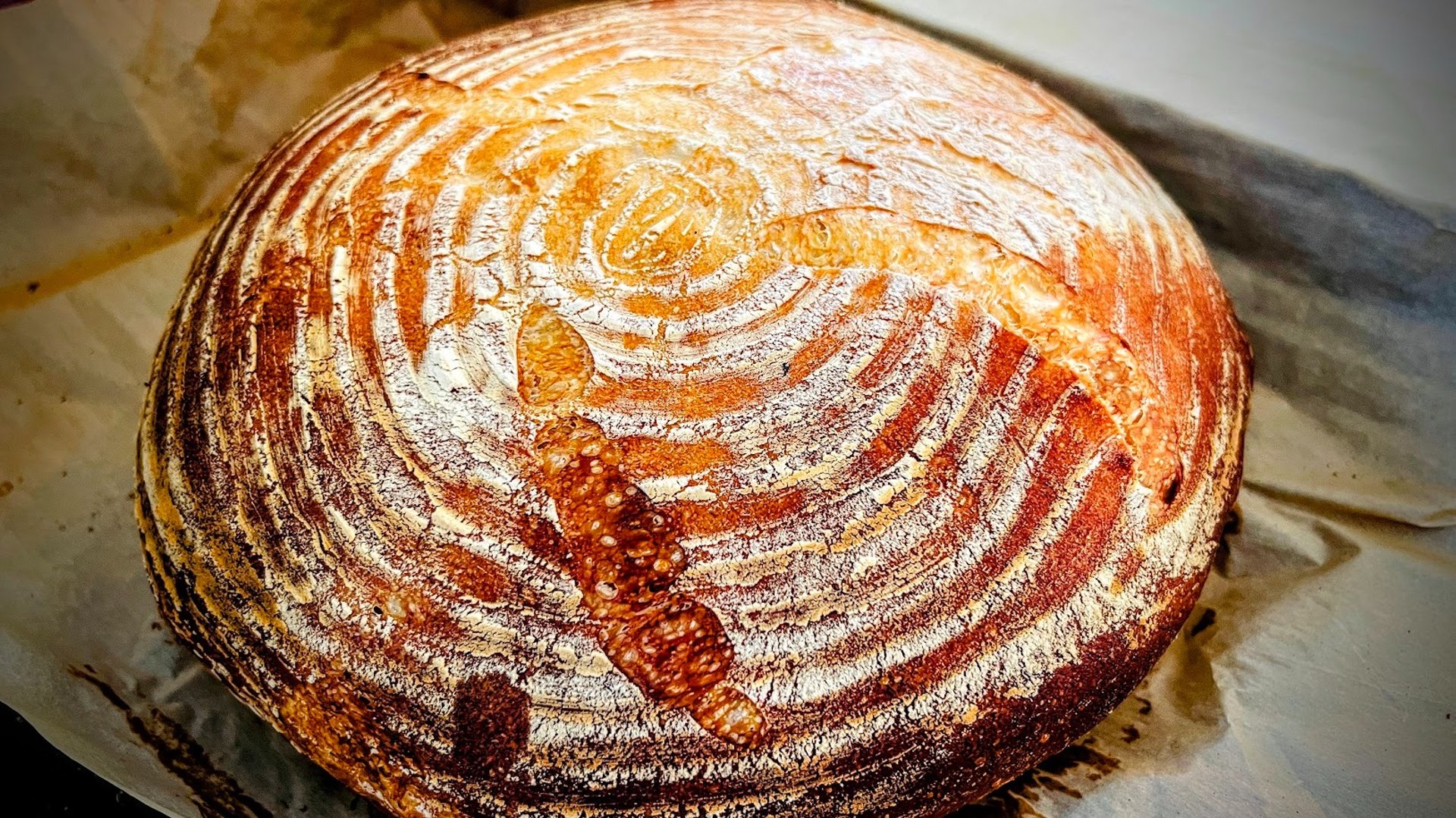
The Beginner’s Guide to Sourdough Bread
Featuring Angus the 5th
Like most people on this planet during the pandemic, I fully jumped on the sourdough bandwagon. Somewhere between lockdown baking, banana bread experiments, and trying to keep myself sane, sourdough entered my life — and honestly, it never left.
Now, let me be very clear: I am not one of those people who has managed to keep the same magical sourdough starter alive for 15 years while lovingly feeding it every morning.
Absolutely not.
In fact, I have accidentally killed several starters over the years for a variety of reasons. Forgotten feedings. Neglect. Life getting busy. One may or may not have been abandoned in the back of the fridge long enough to become its own ecosystem.
But despite all of that, I have successfully brought a new starter back to life five different times.
Which brings us to the current legend: Angus the 5th.
The name actually goes back years before my sourdough era. When my husband and I were expecting our daughter, he jokingly said that if we had a boy, he wanted to name him Angus. We absolutely did not have a boy… but apparently the name stayed alive in this household anyway.
So now, instead of a son named Angus, we have a bubbling jar of fermented flour living on our kitchen counter.
Honestly, it feels fitting.
And truly? If I can do this, so can you.
That’s the thing people don’t tell you enough about sourdough. It doesn’t require perfection. It’s messy, inconsistent, and sometimes unpredictable. Some loaves come out bakery-worthy, and others come out looking like a rustic brick with emotional damage.
Don’t overthink it.
Go with the feel of it. Learn the texture of the dough. Watch the bubbles. Smell the starter. Pay attention to how it rises. Sourdough is less about strict perfection and more about intuition, patience, and enjoying the process.
So if you’ve been intimidated to try sourdough baking, consider this your sign to start.
How to Make a Sourdough Starter
Before you can bake sourdough bread, you need a sourdough starter — the heart of the entire process. A starter is simply flour and water working together over time to create natural wild yeast.
It sounds complicated, but it’s surprisingly simple.
What You Need
Whole wheat flour or unbleached all-purpose flour
Warm filtered water
A glass jar or container
A spoon or spatula
Elastic bands
Patience (about 5–7 days)
One of the best sourdough tricks? Use an elastic band around your jar after every feeding to mark the starter’s level. This helps you track how much it rises throughout the day and lets you clearly see when it’s active and ready to use.
Day 1
In a clean jar, mix:
½ cup flour
¼ cup warm water
Stir until smooth.
Place an elastic band around the jar at the level of the mixture. Cover loosely with a lid or cloth and leave it at room temperature.
Day 2
You may or may not see bubbles yet. That’s completely normal.
Add:
½ cup flour
¼ cup warm water
Mix well and move the elastic band to the new level of the starter.
Day 3–5
This is when things start getting exciting. Your starter should begin bubbling and smelling slightly tangy.
Each day:
Discard about half the starter.
Feed with:
½ cup flour
¼ cup warm water
Move the elastic band to the new level.
Watching the starter rise above the elastic band is a great sign the natural yeast is becoming active.
Day 6–7
Once your starter:
doubles in size within a few hours,
rises well above the elastic band,
has lots of bubbles,
and smells pleasantly sour,
…it’s ready to bake with.
Congratulations. You now officially have a sourdough starter.
Welcome to the obsession.
Easy Sourdough + Yeast Bread Recipe
The Perfect Beginner Hybrid Loaf
This recipe uses both sourdough starter and commercial yeast, which gives you the best of both worlds: rich sourdough flavour with a more reliable rise.
Perfect for beginners.
Ingredients
500g bread flour (about 4 cups)
100g active sourdough starter (about ½ cup)
7g instant yeast (1 packet or 2¼ tsp)
350g warm water (about 1½ cups)
10g salt (1¾ tsp)
1 tbsp honey or sugar
1 tbsp olive oil (optional for a softer loaf)
Step 1: Mix the Dough
In a large bowl, combine:
warm water
sourdough starter
honey
yeast
Stir until combined.
Add the flour and salt. Mix until a shaggy dough forms. Add olive oil if using.
Step 2: Knead
Knead the dough for about 8–10 minutes until smooth and elastic.
If the dough feels sticky, lightly flour your hands — but don’t overdo it.
Step 3: First Rise
Place the dough into a lightly greased bowl and cover with Saran Wrap.
Let it sit overnight in the fridge.
Step 4: Second Rise
Take it out of the fridge and let it come to room temperature for 2-3 hours, or until doubled in size.
Step 5: Shape
Turn the dough onto a lightly floured surface and shape into a round loaf or sandwich loaf.
Place into a banneton, parchment-lined bowl, or loaf pan.
Step 6: Third Rise
Cover and let rise another 30–45 minutes.
Meanwhile, preheat your oven to 450°F (232°C).
If using a Dutch oven, place it inside while preheating.
Step 6: Bake
Score the top of the dough with a sharp knife.
Bake:
Dutch oven: 30 minutes covered + 10–15 minutes uncovered
Regular loaf pan: 35–40 minutes total
Your loaf should be deep golden brown and sound hollow when tapped.
Tips for Better Bread
Adding yeast gives you a faster, more predictable rise while still keeping that classic sourdough flavour.
For a stronger sour flavour, refrigerate the dough overnight before baking.
Feed your starter regularly, even when you aren’t baking.
Don’t panic if your first loaf isn’t perfect. Every sourdough baker has made at least one loaf that looked deeply concerning.
Optional Add-Ins
Jalapeño + cheddar
Cinnamon + raisins
Rosemary + sea salt
Olives + parmesan
Roasted garlic
At the end of the day, sourdough is supposed to be enjoyable. It’s flour on your counter, a warm loaf cooling in the kitchen, butter melting into fresh slices, and the small satisfaction of making something with your own hands.
And if Angus the 5th can survive my chaotic baking journey, your starter can survive too.
Bon appétit!